


The Cuban Missile Crisis and Its Impact on the Global Economy
- Raghav Dalmia
- Dec 22, 2025
- 3 min read
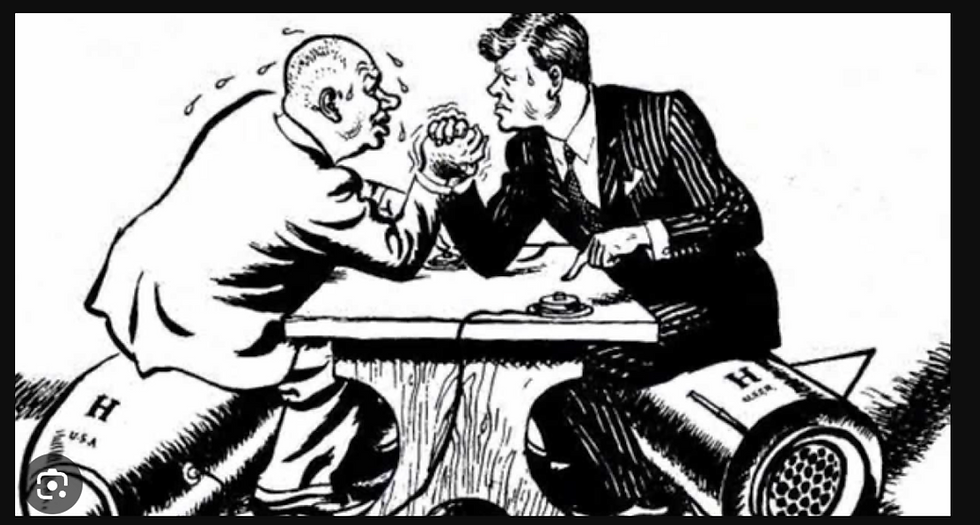
The Cuban Missile Crisis of October 1962 is often remembered as the closest the world has come to nuclear war. While its immediate significance lies in military brinkmanship between the United States and the Soviet Union, the crisis also had important economic consequences that shaped the global economy during the Cold War. Viewed through the lenses of IB Global Politics and IB Economics, the crisis highlights how security threats, power rivalries, and uncertainty can disrupt economic stability at both national and global levels.
Political Tension and Economic Uncertainty
From a global politics perspective, the Cuban Missile Crisis was a confrontation driven by power, security, and ideology. The discovery of Soviet nuclear missiles in Cuba triggered a period of intense uncertainty, which had a direct impact on economic confidence worldwide. Markets are highly sensitive to perceptions of risk, and the possibility of a nuclear conflict between two superpowers created widespread fear of economic collapse.
In macroeconomic terms, uncertainty affects consumption and investment decisions. During the crisis, businesses in both capitalist and socialist economies delayed investment, while governments prioritized security over economic expansion. This led to a short-term slowdown in global economic activity, particularly in countries closely aligned with either the US or the USSR.
Defence Spending and Opportunity Cost
The Cuban Missile Crisis reinforced the arms race between the superpowers, resulting in sustained increases in military spending. From an IB Economics perspective, this raises the issue of opportunity cost. Resources devoted to defence could not be used for social welfare, infrastructure, or productive investment.
For the United States, increased defence expenditure contributed to higher government spending, which stimulated certain industries such as aerospace and manufacturing. However, this came at the cost of reduced spending in areas like education and urban development. In the Soviet Union, the strain of maintaining military parity placed long-term pressure on the centrally planned economy, contributing to inefficiencies and resource misallocation.
Trade Patterns and Economic Blocs
The crisis also reinforced the division of the global economy into competing economic blocs. Countries aligned with the US tended to trade within the Western capitalist system, while those aligned with the USSR became part of the socialist trading network led by the Council for Mutual Economic Assistance (COMECON). This reduced the potential benefits of global trade and limited economic interdependence between rival blocs.
From a global economy perspective, this fragmentation reduced efficiency and innovation by restricting access to wider markets and technologies. Developing countries, particularly in Latin America and Africa, were often forced to align politically with one bloc, shaping their trade relationships and development paths for decades.
Impact on Cuba and Regional Economies
Cuba experienced some of the most direct economic consequences of the crisis. Following the confrontation, the United States tightened its economic embargo, isolating Cuba from Western markets. This increased Cuba’s dependence on the Soviet Union for trade, subsidies, and financial support.
While Soviet assistance provided short-term stability, it also made Cuba vulnerable to external shocks. This lack of diversification limited Cuba’s long-term economic growth and reduced its ability to integrate into the global economy, illustrating how political alliances can shape economic outcomes.
Stabilisation and Long-Term Economic Effects
Despite the immediate risks, the resolution of the Cuban Missile Crisis led to important institutional developments that supported long-term economic stability. The establishment of the Moscow–Washington hotline and the signing of the Nuclear Test Ban Treaty in 1963 reduced the likelihood of sudden military escalation.
From a global politics perspective, these measures improved crisis management and trust between superpowers. Economically, reduced uncertainty encouraged trade, investment, and planning, particularly in Europe and other regions vulnerable to Cold War conflict. This demonstrates how political cooperation can create conditions for economic stability, even in a divided global system.
Conclusion: Lessons for the Global Political Economy
The Cuban Missile Crisis shows that global economic outcomes are deeply influenced by political decisions and security concerns. Although the crisis itself was brief, its impact on defence spending, trade patterns, and economic alignment was long-lasting.
For IB students, this case illustrates the strong link between global politics and economics. Power struggles and security dilemmas can disrupt markets and slow growth, while cooperation and diplomacy can reduce uncertainty and support economic stability. The crisis serves as a reminder that the global economy does not operate in isolation, but is shaped by political choices made under pressure.



Comments